
Ear, Nose & Sinus Care · Flint, Michigan
Minimally Invasive Nasal & Sinus Procedures in Flint, MI
When sinus, ear, or nasal symptoms keep returning despite medical treatment, a minimally invasive procedure may be one option to discuss. Our ENT team evaluates the cause of your symptoms first, then explains which approaches may fit your needs.
Treatment options
Matching symptoms to possible treatments
The symptoms below are a starting point for a conversation with your ENT. They do not confirm a diagnosis or mean a specific treatment is right for you.
Sinus pressure and recurring sinus problems
XprESS balloon sinus dilation
A small balloon is used to widen a selected sinus drainage pathway, guided with the Scopis Image Guidance System by Stryker and your own sinus CT. It may be considered for some adults with chronic or recurring sinus symptoms that continue despite medical treatment.
Learn about balloon sinus dilationPersistent ear pressure, fullness, or trouble equalizing
Audion Eustachian tube balloon dilation
A small balloon is used to dilate part of the Eustachian tube, the passage that helps regulate pressure in the middle ear. It is intended for adults with persistent Eustachian tube dysfunction.
Learn about Eustachian tube dilationNasal blockage associated with nasal valve collapse
LATERA absorbable nasal implant
When weak side walls of the nose contribute to blockage, a small absorbable implant may be placed to support the cartilage there. The implant is gradually absorbed by the body over time.
Learn about nasal valve collapse treatmentOngoing runny nose and congestion from chronic rhinitis
ClariFix cryotherapy
Targeted cold is applied through the nose to nerves that can contribute to chronic rhinitis symptoms. It is intended for adults whose symptoms persist.
Learn about chronic rhinitis treatment
Image-Guided Balloon Sinuplasty
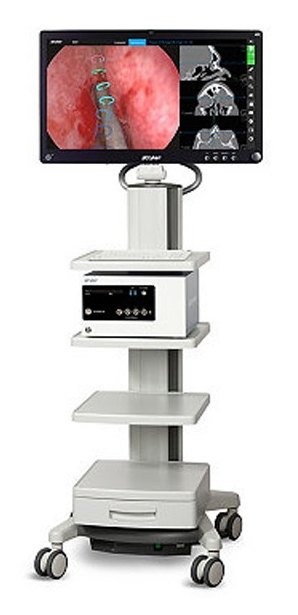
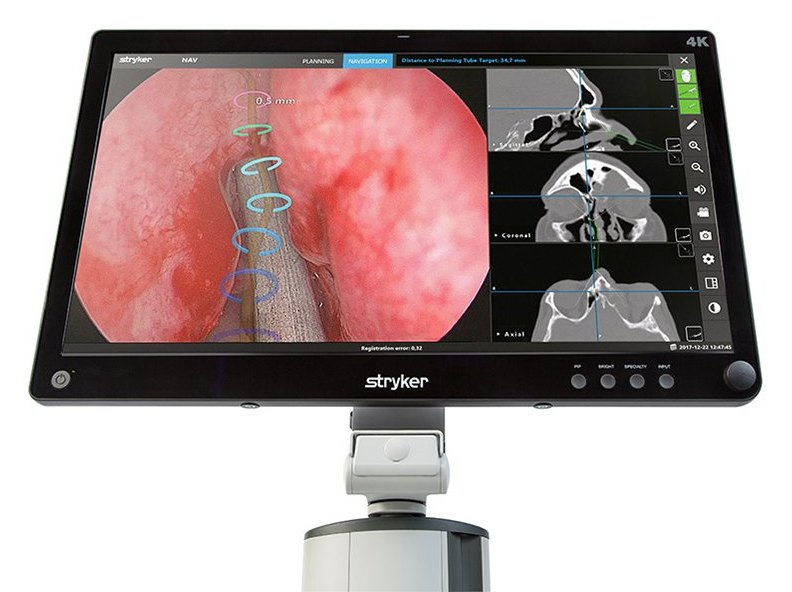
Scopis Image Guidance System by Stryker
Image guidance is what sets balloon sinuplasty apart at Premier Head and Neck Surgery. The state-of-the-art Scopis system by Stryker uses your own sinus CT, like a GPS for the sinuses, so instruments can be tracked for safety and precision as your surgeon guides the balloon into the sinus openings. This image guidance uses equipment normally found in the operating room, which supports patient safety during balloon dilation and sinus procedures.
Built from your own sinus CT
Your sinus CT scan is uploaded into Scopis, creating a detailed map of your sinus anatomy before the balloon is placed.
Guidance that works like a GPS
During the procedure, Scopis shows where the instruments are on that map, the way a GPS shows a route.
Tracked for safety and precision
Your surgeon can follow the instruments in real time while guiding the balloon into the sinus openings.
Your evaluation
How we determine the right treatment
Recommendations are based on your full evaluation rather than a single symptom.
Your symptoms and history
We talk through what you are experiencing, how long it has lasted, and treatments you have already tried, such as medications or nasal sprays.
Examination
Your ENT examines the nose, sinuses, or ears, which may include a nasal endoscopy to look more closely inside the nasal passages.
Testing when appropriate
Depending on your symptoms, this may include CT imaging of the sinuses or hearing and ear pressure testing.
For some patients, continued medical treatment or a different procedure, such as endoscopic sinus surgery or septoplasty, may be more suitable. Your physician will explain the options that fit your situation, including their benefits and risks.
Find out which option may fit your symptoms.
Call our Flint office to schedule an ENT evaluation for persistent sinus, ear, or nasal symptoms.
Call to Schedule an Evaluation