
Nasal Breathing · Flint, Michigan
Nasal Valve Collapse Treatment in Flint, MI
LATERA Absorbable Nasal Implant
A nose that feels blocked, especially when you breathe in, is not always caused by congestion. In some people, the side of the nose lacks enough support and narrows inward with each breath. Here is how LATERA works, how our ENT team finds the cause of nasal blockage, and what to discuss before treatment.
- Addresses
- Nasal sidewall narrowing during breathing
- Approach
- Absorbable implant placed inside the nose
- First step
- An exam to find the cause of your blockage
The procedure
How the LATERA implant works
Air enters through the nasal valve, the narrowest part of the nasal airway, near the side of the nose. When the cartilage there lacks support, the sidewall can narrow inward as you breathe in. LATERA adds support from the inside, which may improve airflow and reduce blockage in appropriately selected patients.
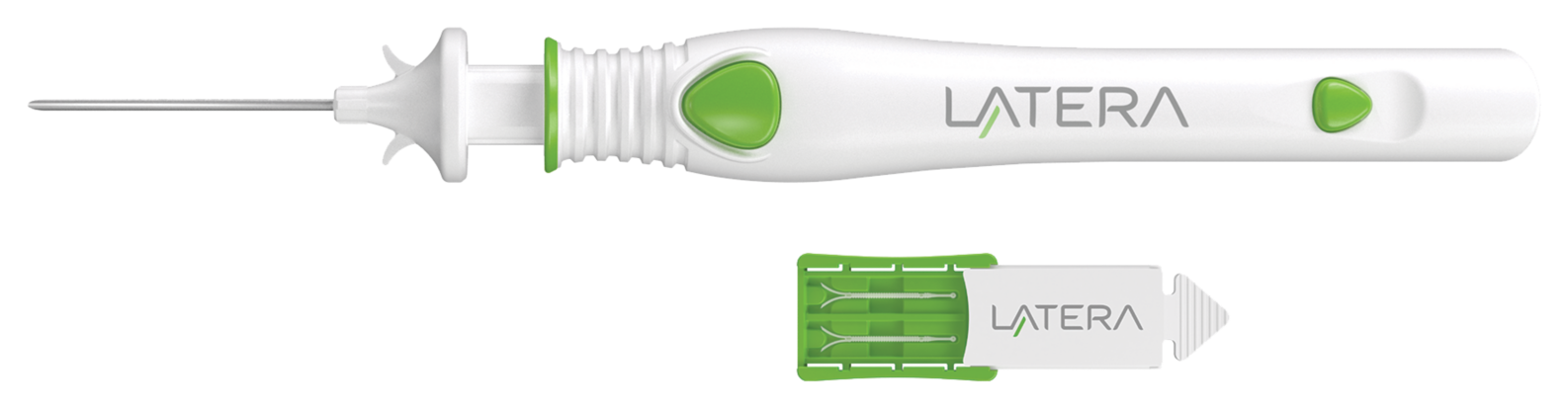
Placed inside the nose
A thin delivery device places the implant inside the sidewall of the nose, where it anchors to support the nasal valve area.
Supports the cartilage
The implant supports the upper and lower lateral cartilage that shape the side of the nose, helping that wall resist narrowing inward when you breathe in.
Absorbed over time
The implant is made of an absorbable material that the body gradually breaks down. Your physician can explain what this means for your follow-up care.
Is nasal valve collapse the cause?
A blocked nose can come from several sources, including a deviated septum, swelling of the nasal lining, allergies, chronic rhinitis, or sinus problems. Symptoms alone cannot show whether the nasal valve is involved. Your ENT examines your nose, including how the side walls move as you breathe in, to identify what is narrowing your airway.
Other options your ENT may discuss
Depending on your findings, your ENT may recommend medical treatment, septoplasty or functional rhinoplasty, LATERA, or more than one of these. If your blockage has a different cause, LATERA would not be expected to help.
LATERA is not used when there is an active infection where the implant would be placed, or when you have or may have an allergy to its absorbable materials.
What to expect
Treatment setting and recovery
Treatment setting
Where LATERA is placed and how you will be kept comfortable depend on your health and treatment plan, including whether it is combined with another nasal procedure. Your physician will explain these details before treatment.
Recovery
Recovery differs from person to person. Your care team will give you instructions for the days after treatment and schedule follow-up to check how the implant is settling.
Safety
Risks to discuss with your physician
As with any implant, LATERA has potential risks. Understanding them is part of deciding whether it is right for you.
Possible side effects
- Pain or discomfort
- Inflammation or irritation
- Feeling or noticing the implant
Other possible complications
- Infection
- Minor changes to the appearance of the nose
- The implant shifting or pushing through the tissue
- Removal of the implant, if a problem occurs
This is not a complete list. Your physician will review your individual risks, benefits, and alternatives before any treatment.
Sinus, ear, and nasal symptoms can overlap. See how this option fits alongside other treatments our team may discuss with you.
Compare minimally invasive nasal & sinus proceduresAsk whether nasal valve support may help your breathing.
Call our Flint office to schedule an evaluation for ongoing nasal blockage.
Call to Schedule an Evaluation