
Ear Care · Flint, Michigan
Eustachian Tube Balloon Dilation in Flint, MI
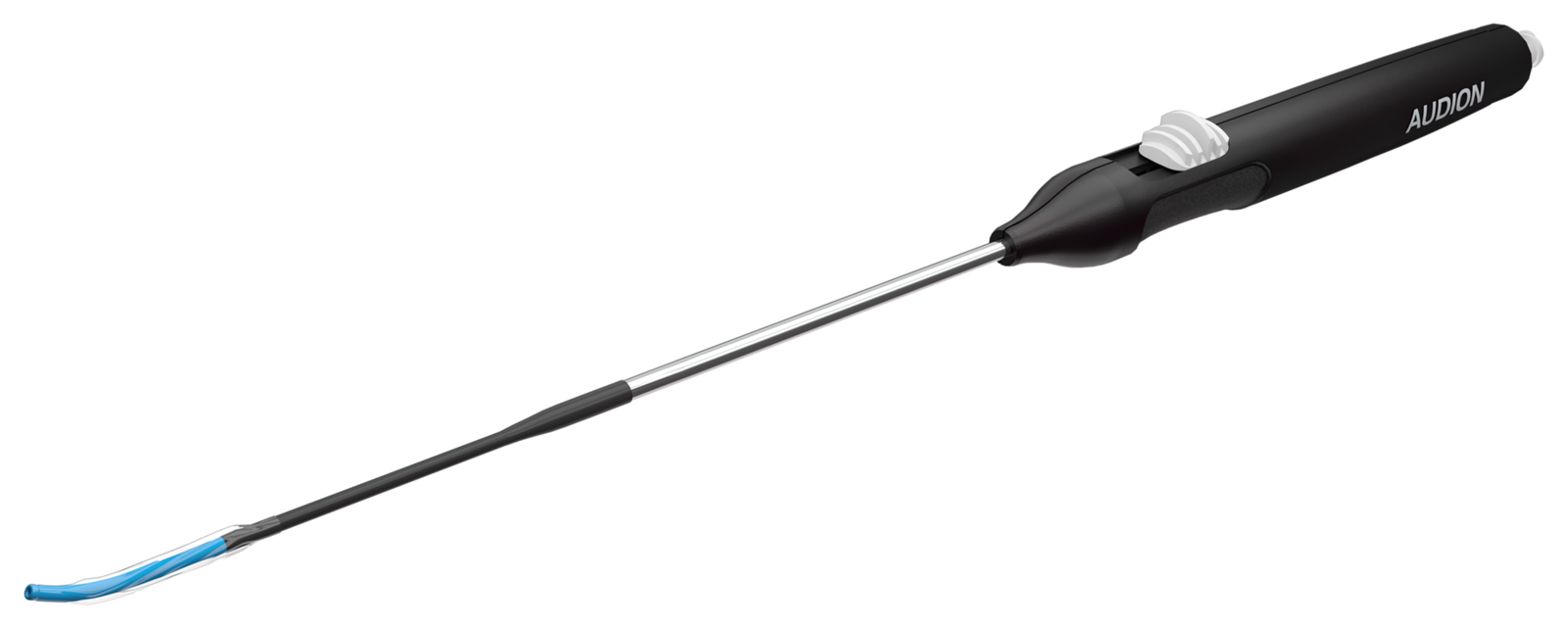
With the Audion ET dilation system
Ear pressure, fullness, popping, muffled hearing, or trouble equalizing that does not go away can affect everything from conversations to air travel. Here is how Eustachian tube balloon dilation works, how it compares with ear tubes, and what to expect if it becomes part of your plan.
- Addresses
- Persistent Eustachian tube dysfunction
- For
- Adults 18 and older
- Approach
- Through the nose
The procedure
How Eustachian tube balloon dilation works
Each Eustachian tube connects the middle ear to the back of the nose. It opens briefly when you swallow or yawn, helping balance pressure behind the eardrum. When the tube does not open as it should, it is called Eustachian tube dysfunction.
Balloon dilation with the Audion system works on the tube itself. It is not a treatment for every type of hearing loss.
Guided through the nose
A small balloon device is passed through the nostril to the opening of the Eustachian tube at the back of the nose.
Inflated in the tube
The balloon is inflated within the cartilage portion of the Eustachian tube for a short time.
Deflated and removed
The balloon is deflated and removed. The goal is to help the tube open and regulate pressure more effectively.
Comparing approaches
Balloon dilation and ear tubes
These options work in different places, and some patients are better suited to one than the other.
Eustachian tube balloon dilation
Works on the Eustachian tube itself, through the nose, with the goal of helping the tube open and regulate pressure on its own.
Ear tubes
Small tubes placed in the eardrum let air into the middle ear directly, bypassing the Eustachian tube while they remain in place.
What to expect
Who it is for
Audion is intended for adults 18 and older. If your child has ear pressure or fluid concerns, our team can discuss other evaluation and treatment options.
Your evaluation
Ear pressure and fullness can have several causes, including issues unrelated to the Eustachian tube. Your ENT reviews your symptoms, how long they have lasted, treatments you have tried, and your ear and nasal examination. Hearing and ear pressure testing may be part of your evaluation.
Results and recovery
For appropriately selected adults, the procedure may help improve ear pressure and fullness. Some people have continued symptoms or need additional treatment. The treatment setting depends on your health and plan, and your care team will give you recovery instructions and arrange follow-up.
Safety
Risks to discuss with your physician
Like any procedure, Eustachian tube balloon dilation has potential risks. Understanding them is part of deciding whether it is right for you.
More common side effects
- Pain or discomfort
- Inflammation of the tissue
- Injury to the Eustachian tube
- Ear symptoms that continue or worsen
Less common, serious complications
- Air trapped under the skin (subcutaneous emphysema)
- Injury to the carotid artery
This is not a complete list. Your physician will review your individual risks, benefits, and alternatives before any treatment.
Sinus, ear, and nasal symptoms can overlap. See how this option fits alongside other treatments our team may discuss with you.
Compare minimally invasive nasal & sinus proceduresTalk with our team about lasting ear pressure.
Call our Flint office to schedule an evaluation for persistent ear pressure, fullness, or trouble equalizing.
Call to Schedule an Evaluation